
Bitcoin, Crypto, BTC, Blockchain, CryptoNews, Investing — if you read one no-nonsense breakdown of what’s moving markets today, this is it. Market volume is soft, ETF flows are messy, a few big players are reshuffling balance sheets, NFT valuations are still smoking from the boom-to-bust, and influencers keep getting paid to hype stuff that often collapses. I’ll walk through the real mechanics behind the headlines so you don’t get burned chasing noise.
Quick market snapshot — liquidity, volume, and the headline noise
The crypto market opened the week with volume that can only be described as “meh”: roughly $94 billion across the board. That matters because when volume is low, price moves look louder and bigger than they actually are. The usual suspects — Bitcoin and Ethereum — looked soft, altcoins were volatile, and a couple of tokens saw inflows while most funds bled capital for the fourth straight week.
Bitcoin, Crypto, BTC, Blockchain, CryptoNews, Investing shows up everywhere right now because the conversation is dominated by ETFs, capital flows, and regulation — everything that affects how participants allocate money, and how fast that allocation changes when the music stops.
Regional flows tell the real story: the United States dominates the ETF asset base. When U.S. ETFs move, global liquidity follows. That’s why headlines saying “BlackRock dumped crypto” are technically accurate but deliberately incomplete. They’re not dumping spot Bitcoin on an exchange; they’re dealing with ETF redemptions and the associated removal of underlying assets.
BlackRock vs. crypto headlines: ETFs, not direct coins
Here’s the key distinction everyone should understand: when people read “BlackRock dumped $400 million of crypto,” they often picture Wall Street moving giant bags of BTC and ETH on exchanges. The reality is more prosaic and, frankly, more structural: the asset manager saw outflows from its spot BTC and ETH ETFs and had to reduce the ETFs’ underlying holdings accordingly.
Over the week in question, BlackRock’s spot BTC ETF (IBIT) recorded roughly $261 million in outflows while the ETH spot ETF faced about $157 million. Combined, that’s around $374 million of assets leaving ETFs — not a direct sale of Bitcoin from BlackRock’s corporate treasury into the open market.
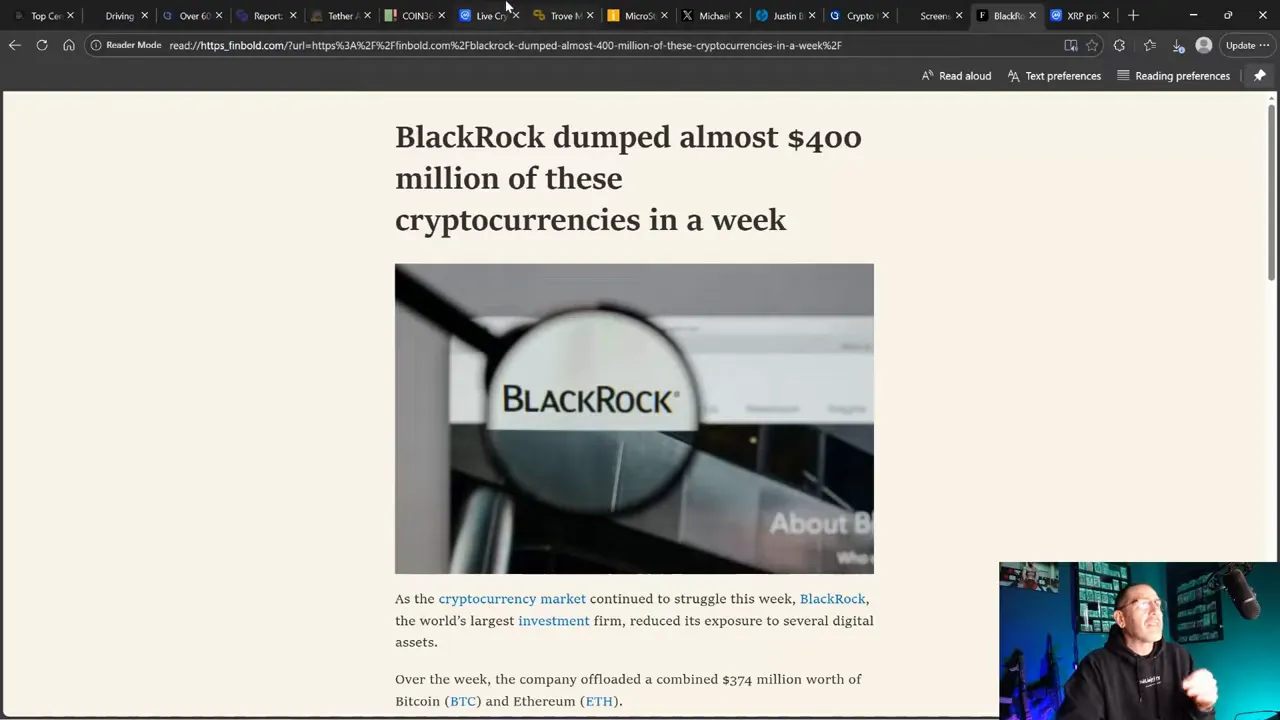
Why does this distinction matter? Because ETFs create a flow-through mechanism. Investors sell ETF shares when they want out, and the ETF provider adjusts the vehicle’s holdings to reflect that. It’s a mechanical process. Market headlines conflate the ETF share redemptions with an aggressive, unilateral “dump” of crypto, which fuels panic and misleads retail holders.
Put simply: ETF outflows = share redemptions, which lead to asset reductions. The panic spin says “institutional dump.” The reality is: institutional products handled investor requests, like any other investment vehicle would. Yet the impact on market sentiment and price can be very real, because exchange-traded outflows remove liquidity and amplify price moves when volumes are thin.
ETF flows look weak — and have since October
The last 30-day window hasn’t been pretty for ETF flows. The major product launches drew a lot of attention in October, but sustained inflows have been inconsistent. When inflows reverse, ETF providers either redeem or sell underlying assets. That’s the plumbing of the market, and it’s boring — until it’s not.
Bitcoin, Crypto, BTC, Blockchain, CryptoNews, Investing participants need to keep an eye on these flows because ETF behavior often sets the tone for institutional sentiment. If ETF flows turn negative consistently, expect headline volatility and a continued fragile bid under prices.
MicroStrategy, Saylor, and the funny-money problem
MicroStrategy announced a plan to swap roughly $6 billion of convertible debt for equity. On the surface, that looks like balance sheet management: convert debt into equity, reduce interest obligations, and reposition the company. But there’s a catch related to how Bitcoin holdings are valued versus how easy they would be to liquidate in a crisis.
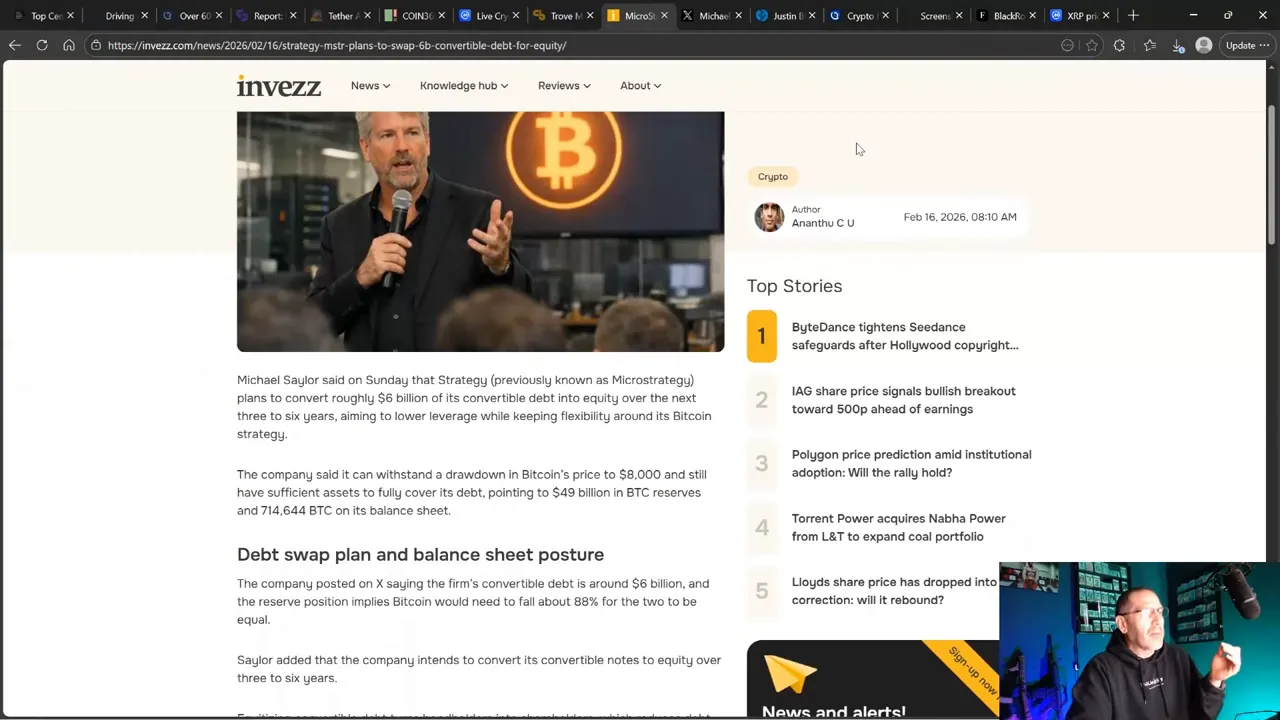
The company claims it can withstand a hypothetical drop in Bitcoin price down to $8,000 and still cover its debts. That’s a math game that makes sense on paper but not in practice. If a company holds a massive position in BTC and needs to liquidate that position to pay down debt, attempting to sell a large chunk while markets are thin would push the price down — meaning you’d realize substantially less than the theoretical $8,000 per coin.
This isn’t theoretical nitpicking. When a single holder controls a meaningful percentage of floating supply, forced selling begets lower prices. Lower prices trigger margin calls, panic selling, and eventual cascades. It’s the old liquidity trap: assets are worth nominal values until mass selling realizes lower market prices because of market depth limits. And yes, that reduces the real-world value of those holdings the moment liquidation begins.
Bitcoin, Crypto, BTC, Blockchain, CryptoNews, Investing investors should watch large holders’ intentions closely because they can become the axis around which market shocks rotate.
NFTs, influencers, and the Trove Markets debacle
NFT valuations cratered after the speculative boom. High-profile purchases became cautionary tales. Case in point: a celebrity bought a Bored Ape for 500 ETH (about $1.2 million at the time), and its value later tumbled to roughly $12,000 — an eye-watering 99.99% decline for anyone who bought at the peak.
That story isn’t about talent or celebrity; it’s about market bubbly behavior and the toxic combination of hype-plus-liquidity. Money does not equal skill. People with deep pockets buy things they don’t understand because influencers and social proof are powerful. Then the market corrects.
Trove Markets: paid influencers and a refund in stablecoins
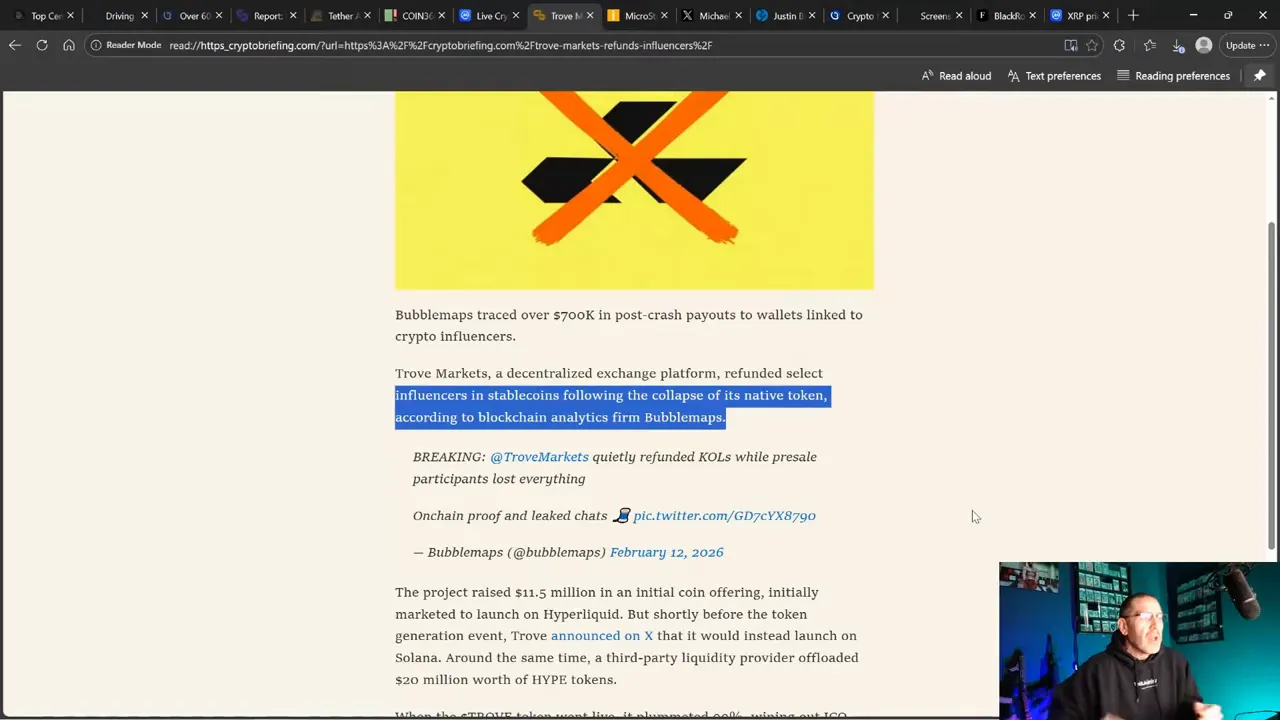
Trove Markets’ token launch is a recent, ugly example — and it’s textbook. The project raised around $11.5 million in an ICO, used influencers to build hype, then pivoted launch chains at the last minute. A third-party liquidity provider offloaded $20 million in hype tokens ahead of launch and, when the token went live, it collapsed roughly 99% — wiping out retail investor capital.
Here’s the kicker: Trove reportedly refunded select influencers in stablecoins after the crash. That means the influencers who promoted the token were quietly made whole, while ordinary contributors were left holding a wrecked token. Blockchain trace data showed hundreds of thousands of dollars in USDC and USDT moved through wallets linked to the project within hours of the crash.
This pattern is not new. Promoted posts, paid placements, and undisclosed sponsorships have been in crypto for years. What changed is the scale and audacity: projects now sometimes use stablecoins to settle influencer debts after rug pulls, meaning the people doing the public convincing get paid while investors eat the losses.
Bitcoin, Crypto, BTC, Blockchain, CryptoNews, Investing enthusiasts must learn to spot paid hype. If a token shows an organized wave of promotion across many accounts at the same time, that’s a red flag. If the promoters don’t disclose sponsorship or compensation, that’s a legal and ethical problem and a signal to keep your wallet closed.
How to spot shilled projects and avoid getting wrecked
Detecting shilled projects is both art and checklist. The market loves narratives, and scammers exploit that. Protect yourself with a few practical checks before clicking buy:
- Look for coordinated promotion. A sudden flood of social posts, identical language across channels, and a rush of “hot tips” are classic signs that a promo campaign is running.
- Check token distribution and liquidity. Who holds the tokens? Are there whale wallets or concentration that looks dangerous? If a few wallets hold most tokens, the exit risk is high.
- Follow the money on-chain. Large, suspicious transfers before or immediately after launch often reveal the rug pull playbook.
- Read the fine print. Promotions should disclose sponsorship. If the influencers hyping it aren’t transparent about being paid, consider that an implicit warning.
- Value real utility over narrative. Is the project solving a verifiable problem, or is it all buzzwords and vague promises?
These aren’t foolproof knives in the dark, but they move you from pure FOMO to informed skepticism. The market is fueled on hype. The moment you feel like you can’t afford to miss out, step back and run the checks above.
XRP, Solana, and fund flows: who’s winning the inflows?
Amid the general outflows, a couple of assets still attracted capital. XRP and Solana (SOL) saw inflows in contrast to the broader bleeding across crypto funds. XRP’s price bounced back to about $1.50, and its weekly volume held up better than many altcoins.
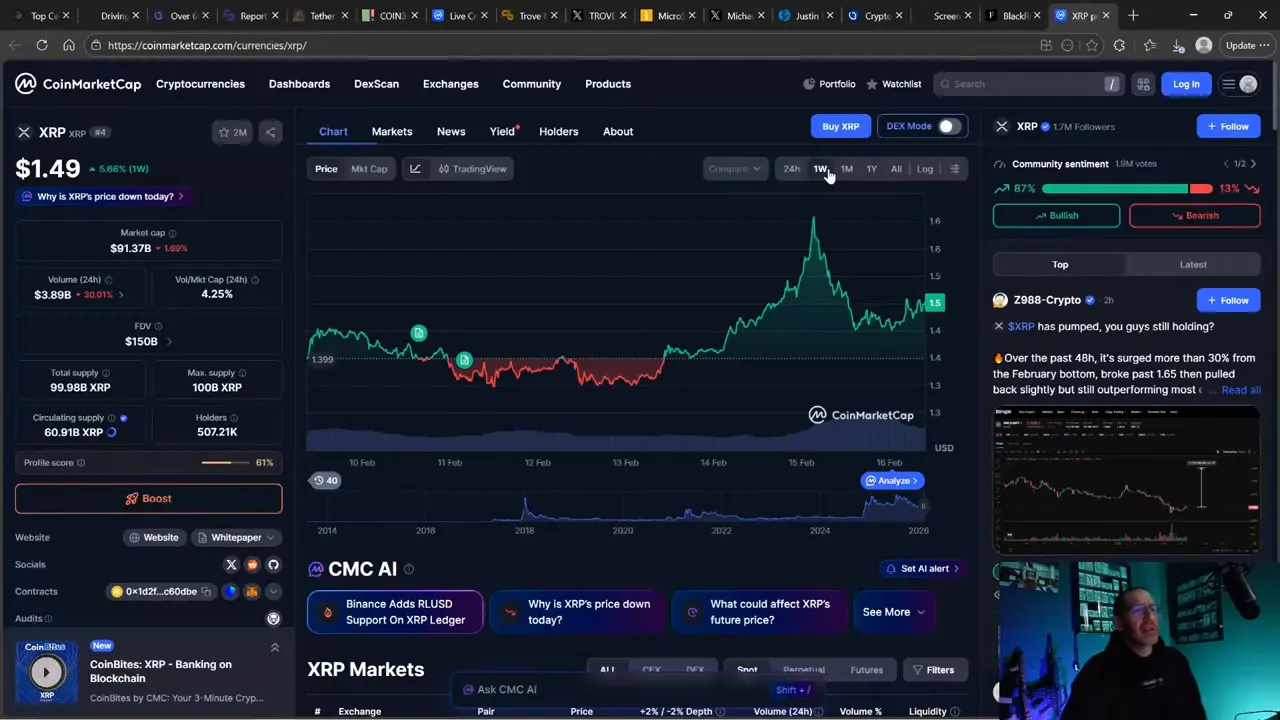
Why does that matter? Because hot money migrates to perceived momentum, and flows to XRP and Solana suggest traders still see pockets of opportunity. But flow behavior is fickle—what goes in this week can evaporate next week if the market narrative shifts.
Bitcoin, Crypto, BTC, Blockchain, CryptoNews, Investing participants should treat these inflows cautiously. A handful of funds or a few regional markets pushing money into a token doesn’t equate to durable demand. Watch on-chain activity and sustained usage metrics, not just headline inflows.
Regulatory timing and the Senate Banking Committee delay
If there’s one thing that could flip markets from fragile to confident, it’s regulatory clarity. Unfortunately, the Senate Banking Committee delayed a mega-markup vote that included crypto provisions, and it’s now been more than a month with little public progress. That delay matters.
Why? Because regulatory clarity opens windows for institutional products, custody, and clear accounting rules. When the timeline drifts through election season, the window for constructive policy can close for a long stretch. That drives capital patience lower and market volatility higher.
Bitcoin, Crypto, BTC, Blockchain, CryptoNews, Investing participants should keep an eye on policy calendars. An announced vote or compromise can create momentum; radio silence often puts the market on edge.
Why the U.S. matters more than any other market
Asset under management (AUM) stats put the scale disparity on full display. Of roughly $132 billion in AUM across the ETF landscape discussed, about $110 billion sits in U.S.-listed products — around 83% of the market. The U.S. is the heavyweight: when it moves, the rest of the world feels it.
Germany and Switzerland show up as influential regional players, but they’re nowhere near the U.S. in total AUM. That concentration means that U.S. ETF investors set much of the tone. That can be stabilizing or destabilizing depending on whether flows are net positive or negative.
Bitcoin, Crypto, BTC, Blockchain, CryptoNews, Investing folks need to plan for U.S.-centric risk because global capital allocation often mirrors what happens in U.S. products.
Practical moves — how to navigate the current landscape
Markets are messy, headlines are louder than reality, and the typical pump-and-shill cycle keeps repeating. If you want to protect capital and position for opportunity without turning into a headline chaser, consider these practical steps:
- Reassess portfolio liquidity needs. In low-volume environments, selling large positions quickly can materially lower execution prices. Plan trades in tranches and use limit orders where possible.
- Hold cash or stablecoins for opportunities. Volatility creates openings. Holding deployment capital avoids FOMO buys at the peak of the hype cycle.
- Use on-chain analytics and flow data. Watch ETF flows, whale movements, and exchange balances. Changes in those metrics often precede price action.
- Verify influencer promotions. If a token is being hyped hard, assume it’s paid until proven otherwise. Don’t chase promoted narratives.
- Diversify allocation across risk profiles. Keep a mix of core (BTC, ETH), tactical (high-conviction altcoins), and opportunistic positions (small caps or liquidity events), sized to your risk tolerance.
- Stay updated on regulatory milestones. Votes, committee announcements, and rule changes move capital. Mark calendars and avoid surprise exposure around big policy events.
Bitcoin, Crypto, BTC, Blockchain, CryptoNews, Investing reputation is built by those who survive cycles, not those who call tops and bottoms loudly. Long-term success doesn’t come from hype; it comes from position sizing, timing, and patience.
Real talk: influencers, paid promotions, and who gets paid when projects fail
There’s an uncomfortable truth in crypto communities: promoters often get paid regardless of outcomes. The Trove Markets example shows refunds to influencers in stablecoins while ordinary investors lost value. That’s not a unique story — it’s a pattern.
Influencers and projects sometimes work a deal that compensates promotional work. If the token tanks, promoters may get stablecoin refunds, meaning their public-facing advocacy cost them nothing. Meanwhile, retail participants who bought tokens during the hype often absorb the loss.
That creates perverse incentives. When marketing outweighs product, the market becomes a machine that transfers wealth from late retail into early-stage promoters and insiders. Smart players watch the promoter side of the ledger—and then decide if they want to play that game.
My final take and what matters going forward
BlackRock’s “dump” headlines need to be read through the ETF lens. The company isn’t necessarily selling spot holdings from corporate coffers; ETFs are inherently flow-through instruments. MicroStrategy’s debt-equity swaps highlight liquidity illusion risk when a huge holder would be forced to sell into low depth. Trove Markets and the larger influencer ecosystem show scammers and promoters remain active, and regulatory delays keep institutional adoption uncertain.
Market participants should treat every hyped narrative with a dose of skepticism and evaluate risk with sober tools: on-chain data, flow charts, AUM figures, and clarity on who benefits when a token surges. Use the checks listed above to spot organized promotion and keep position sizes appropriate for your tolerance.
Bitcoin, Crypto, BTC, Blockchain, CryptoNews, Investing will keep changing. Headlines will scream. Influencers will promote. Projects will pump and then dump. The players who do best are the ones who separate signal from noise, watch flows, and keep enough capital in reserve to act when opportunity presents itself.
What to do next
If you want to act rather than react:
- Keep a small core of BTC and ETH as portfolio anchors.
- Watch ETF flows daily if you trade around macro headlines.
- Run on-chain checks before buying hyped tokens: token distribution, liquidity, and early whale activity.
- Avoid flashing cash into influencer-driven launches unless the promoter discloses compensation and you understand the vesting/liquidity schedule.
- Track regulatory calendars; treat delayed policy votes as reasons for cautious exposure.
Markets love drama. But you don’t have to be a participant in every episode. Keep your plan, mind the flows, and don’t confuse publicity with validity.
Bitcoin, Crypto, BTC, Blockchain, CryptoNews, Investing is here to stay as an asset class and a technology. The noise will change form, but the core drivers — adoption, liquidity, and regulation — remain constant. Learn to read those signals; the rest is just background noise.
XRP UP 🚨BLACKROCK DUMPING MORE BTC ETH🚨 — Bitcoin, Crypto, BTC, Blockchain, CryptoNews, Investing. There are any XRP UP 🚨BLACKROCK DUMPING MORE BTC ETH🚨 — Bitcoin, Crypto, BTC, Blockchain, CryptoNews, Investing in here.

